


Stablecoins are increasingly being used to settle payments behind existing card networks, allowing money to move around the clock without changing how consumers pay.
But rather than cutting Visa, Mastercard or banks out of the process, the technology is beginning to replace a narrower piece of the payments stack: the traditional banking rails used to settle obligations between participants.
That shift was in focus this week when SoFi began settling debit and credit card transactions with Mastercard using its SoFiUSD stablecoin. The bank said it is migrating its entire card program, which it expects to process more than $25 billion in annualized volume, to the system.
The shift does not remove intermediaries from the card settlement process, a SoFi spokesperson told Cointelegraph, but provides an alternative blockchain-based settlement rail.
For customers, the change largely happens behind the scenes. SoFi cardholders will continue using their debit and credit cards as normal, while moving the process onchain allows the bank to settle transactions faster, according to the spokesperson.
Visa is also moving settlement onchain. In April, the company said its stablecoin settlement pilot had reached a $7 billion annualized run rate as it expanded support to nine blockchains, describing blockchain settlement as a “viable complement to traditional settlement rails.”
Related: US weighs overseas push for dollar-backed stablecoins: Bloomberg
Stablecoins don’t eliminate payment intermediaries
Federal Reserve researchers wrote in a March note that stablecoins could change the economics of payments without necessarily eliminating banks.
Cointelegraph spoke with payments and investment experts to better understand what moving card settlement onchain actually changes, and what remains largely the same.
“I wouldn’t call it disintermediation at this stage,” Martins Benkitis, co-founder and CEO of emerging-markets liquidity provider Gravity Team, told Cointelegraph.
“Visa and Mastercard are still there. The banks are still there. The network is still calculating the obligations, managing the transaction and deciding how participants interact with it,” he said.
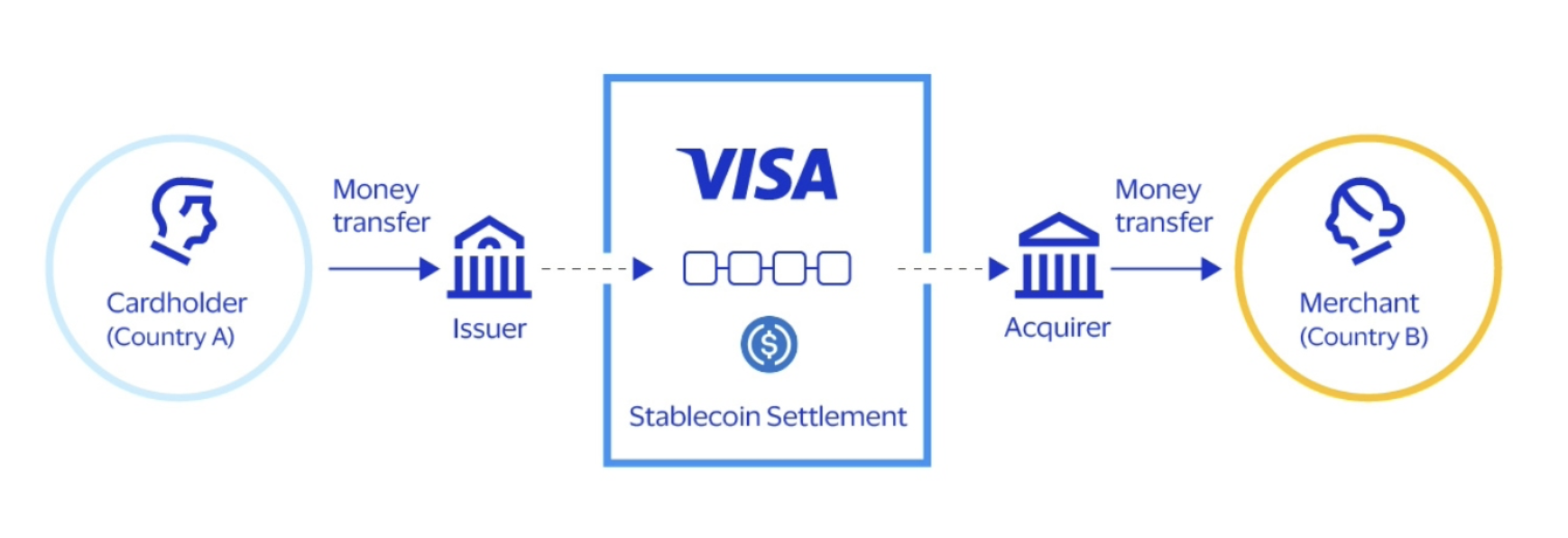
Visa stablecoin settlement model. Source: Visa
As a result, stablecoins could become a larger part of payments without businesses or consumers necessarily interacting with them directly.
“If stablecoins become a major part of payments, most businesses probably won’t care that there is a stablecoin somewhere in the process,” Benkitis said. “They’ll care that settlement is available when they need it and that the money arrives.”
The economics of faster settlement
Varun Datta, venture capitalist and founder of Truth Ventures, agreed that continuous settlement could reduce delays and the amount of capital firms need to keep in different locations for payments, particularly across borders.
But those benefits do not necessarily translate into cheaper payments, he said. Conversion, compliance, integration and stablecoin-management costs still need to be considered.
“I don’t think speed on a blockchain automatically means a cheaper end-to-end payment,” Datta said. He added that he would want to see evidence of lower total costs and better liquidity management at scale before calling the economic case proven.
Related: US stablecoin adoption could surge with bank-like protections: Visa survey
Stablecoins still need local liquidity
The economics can become more complicated when stablecoins ultimately need to be converted into local currencies.
Benkitis said that while dollar-denominated stablecoins can move between balance sheets within minutes, completing payments in emerging markets can be more complicated. Local currency liquidity can be thinner, fewer banks may handle the flows, and access to the domestic banking system is still required.
“The stablecoin gets the value there quickly,” Benkitis said. “You still need the local liquidity to finish the payment.”
Magazine: Winners and losers of the SEC’s new tokenized stocks rules
