

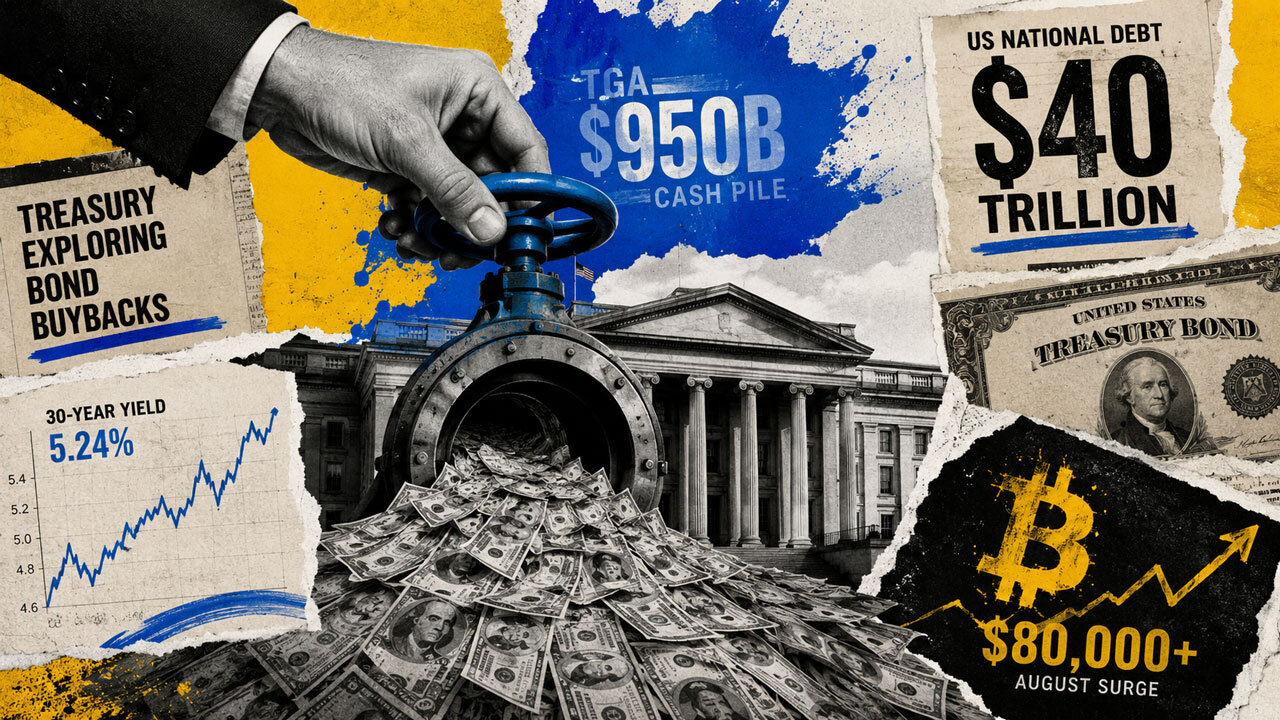
Bitcoin price has crossed $80,000 as the US Treasury explored tapping its roughly $1 trillion cash pile to fund an escalating effort to stabilize long-term government debt.
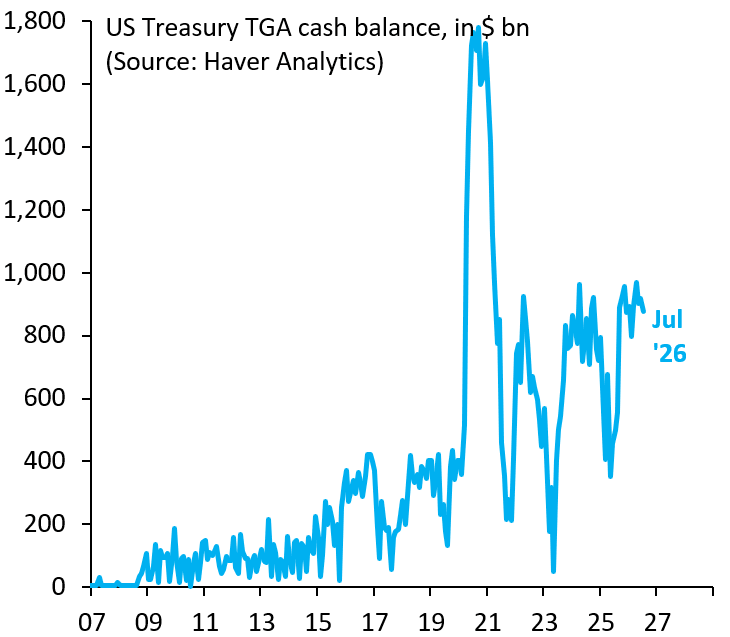
Two senior Treasury officials told CNBC that the Treasury General Account, the federal government’s operating account at the Federal Reserve, could help finance expanded bond buybacks. The officials did not specify how much could be used or when. Reuters put the account at about $940 billion as of last Wednesday.
The report extends a sharp shift in Treasury’s response to rising borrowing costs.
On Aug. 19, the department unexpectedly said it would at least double liquidity-support buybacks for 10- to 30-year securities to $4 billion per operation from $2 billion, effective Sept. 9 through Nov. 4.
Bitcoin has gained roughly 27% in August, putting it on course for its best August since 2017 in a month that has historically produced a median loss of about 7%.
Bond market pushes Treasury toward a bigger intervention
The pressure increased after the bond market quickly erased much of the relief triggered by Treasury’s Aug. 19 announcement.
The 30-year Treasury yield had climbed as high as 5.337%, its highest since 2007, before falling to about 5.18% after the buyback expansion was announced. By the end of last week, longer-dated yields had largely retraced the decline. The 30-year yield remained around 5.24% on Monday, while the 10-year traded near 4.70%.
Treasury has yet to conduct any of the enlarged purchases, meaning the reversal reflected skepticism over the announcement rather than the failure of completed buybacks. The larger operations begin in September.
Still, Treasury Secretary Scott Bessent widened the possible response a day after the initial announcement, saying purchases could rise beyond the new $4 billion level.
He described the operations as an attempt to improve liquidity in parts of the Treasury market strained by thin summer trading and heavy corporate issuance, including borrowing to finance artificial intelligence infrastructure.
The mid-quarter change itself was unusual. Treasury typically uses its quarterly refunding process to communicate changes to debt management, giving investors a predictable schedule. The Aug. 19 announcement came weeks after the latest refunding plans had already been set.
Bessent said Monday that Treasury would continue with its regularly scheduled auctions, including sales of longer-dated debt, while leaving open future changes at the next quarterly refunding.
The intervention comes as the underlying financing burden continues to grow. US national debt crossed $40 trillion last week, including about $32.3 trillion held by the public, while higher yields are rapidly increasing federal interest costs.
The private sector is also competing for the same pool of capital. US technology companies have issued about $220 billion of debt this year to finance AI infrastructure, up sharply from 2025, adding another source of supply in a market already absorbing enormous government borrowing.
$950 billion cash pile changes the liquidity calculation
For Bitcoin investors, the TGA option would give Bessent more room to finance purchases without immediately matching them with additional short-term Treasury issuance.
Markets had initially expected Treasury to finance larger long-bond purchases by selling more bills, effectively shifting government borrowing toward shorter maturities. Bessent has referred to that approach as a “Treasury Twist.”
Drawing cash directly from the TGA could initially avoid some of that additional issuance. CNBC reported that the account has grown to roughly $950 billion, compared with a target of about $550 billion to $600 billion under the Biden administration.
The distinction has consequences for financial liquidity. Government spending from the TGA transfers cash held at the Fed back into the banking system. Financing every purchase with new Treasury issuance can absorb some of that liquidity from investors instead.
The firepower has limits. The TGA pays federal salaries, contractors, interest, and other government obligations, and Treasury ultimately needs to maintain sufficient cash to operate. Any large drawdown would eventually have to be replenished through tax receipts or additional borrowing. Treasury also lacks the Federal Reserve’s ability to create reserves.
That constraint makes clear that the $950 billion figure does not represent an announced $950 billion bond-buying program. Treasury officials have given no indication that anything close to the full balance would be deployed.
Still, the willingness to discuss the account has intensified debate over how far policymakers will go to restrain long-term borrowing costs.
Brookings Institution senior fellow Robin Brooks said the prospect of using the TGA would reinforce investor expectations that “artificial yield caps are coming,” arguing that such a perception could put further pressure on the dollar while supporting precious metals.
The Federal Reserve has so far stayed out of Treasury’s intervention. Fed officials have continued to emphasize their inflation and employment mandates, while Chair Kevin Warsh is scheduled to deliver his first Jackson Hole keynote Friday as investors look for clues on whether monetary policy will provide any relief to the bond market.
Bitcoin’s breakout extends beyond the dollar
The increasingly aggressive Treasury response has coincided with a dramatic reversal in Bitcoin after months of weakness.
Bitcoin moved above $80,000 earlier today after gaining more than 4% during the last 24 hours. At roughly 27% higher in August, the cryptocurrency is headed for its strongest August since its 2017 bull market, when it gained more than 60%.
Gold has rallied alongside it as investors revive the so-called debasement trade. Both assets surged after Bessent’s initial announcement, while the dollar weakened as investors questioned whether Treasury intervention could suppress yields without addressing deficits, inflation and the government’s borrowing requirements.
Strive CEO Matt Cole said Bitcoin’s move against gold strengthens the bull case because the cryptocurrency is now appreciating against both the dollar and another scarce monetary asset.
Cole pointed to the BTC/gold ratio as an early signal during the previous cycle. Bitcoin peaked against gold in December 2024, about 10 months before its dollar-denominated peak in October 2025. The sequence reversed this year, with Bitcoin bottoming against gold in February before reaching its dollar low in July.
He argues that a weaker dollar, continued currency debasement and growing competition for scarce assets in an AI-driven economy could create a stronger backdrop for Bitcoin over the next 12 to 18 months.
Meanwhile, the speed of the current rally also raises the risk of a near-term reversal.
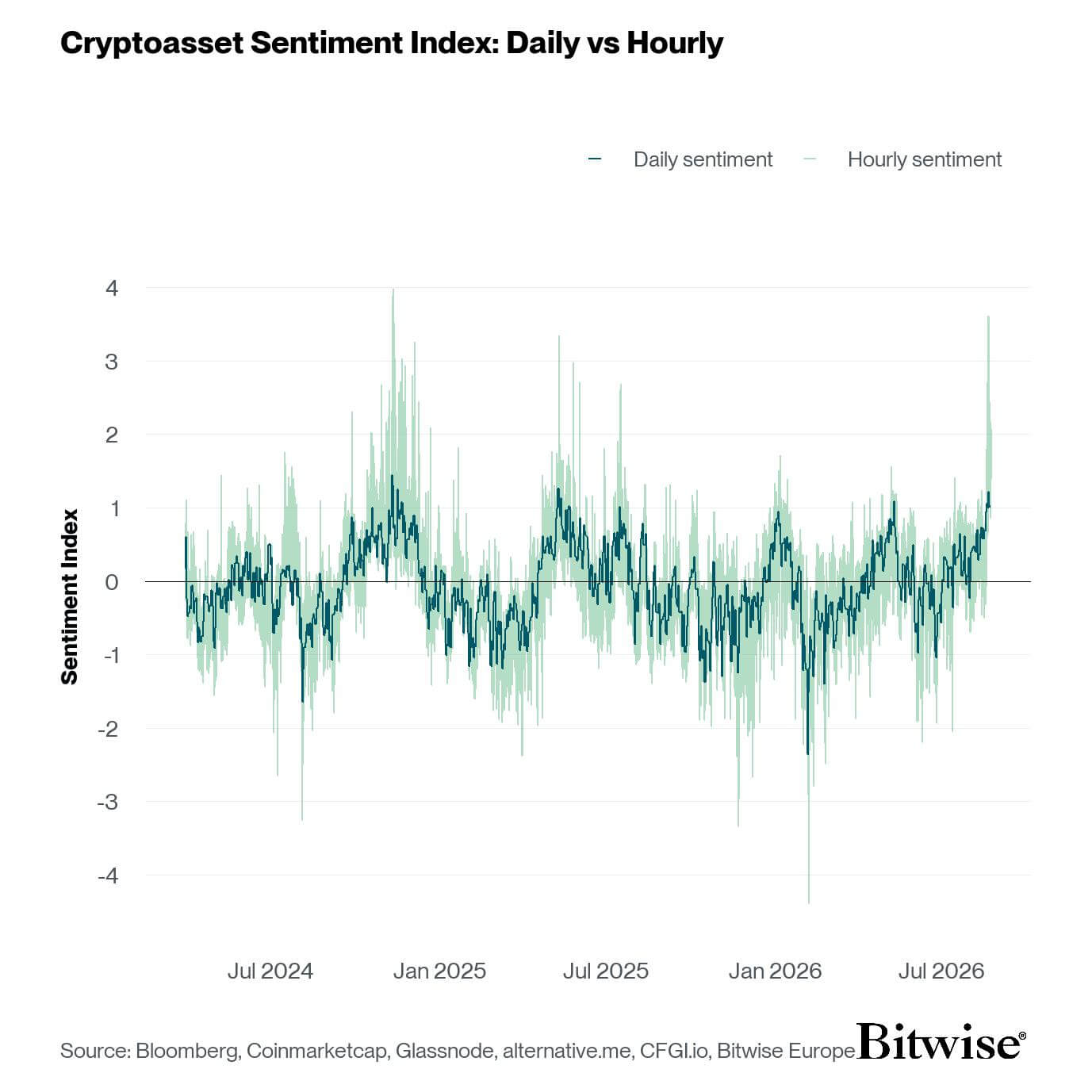
Bitwise Europe research head André Dragosch said the firm’s crypto sentiment index briefly reached its highest level since late 2024 as funding rates, short liquidations and investor optimism surged. He said a pullback or consolidation now appears likely, although the broader recovery could remain intact.
That leaves Bitcoin and the Treasury market increasingly tied to the same question.
Bessent has more tools available to support long-dated bonds, including larger buybacks, changes to the maturity mix of government borrowing, and potentially hundreds of billions of dollars sitting in the TGA.
The bond market is still confronting $40 trillion of federal debt, persistent deficits, inflation risk, and record demand for private capital.
For Bitcoin investors, every escalation adds another test of whether those forces can be managed without further weakening confidence in dollars and long-term government debt.
