

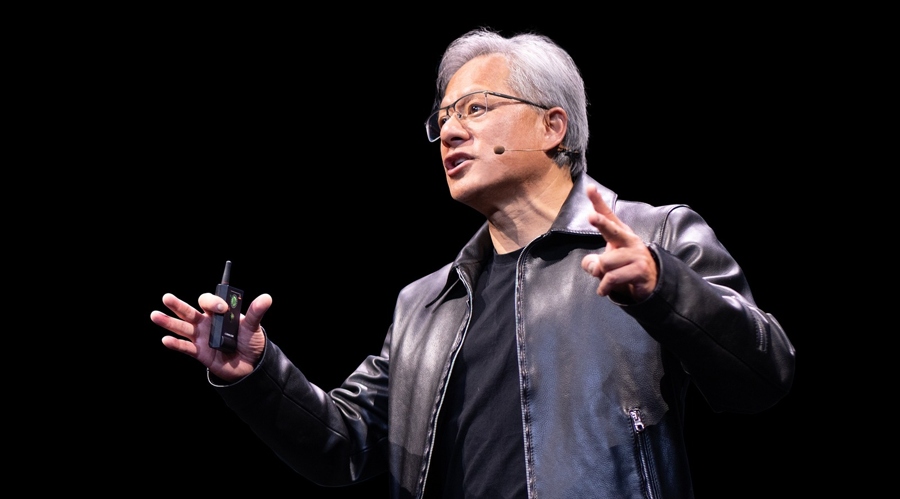
With data-center sales hitting $51.2 B and Q4 guidance at $65 B, Nvidia leaves
bubble talk in the dust, even if some cautionary flags remain.
Nvidia: Revenues to the Moon
Nvidia’s third
quarter of fiscal 2026 posted a record $57.0 billion in revenue, up 22 %
from the previous quarter and 62 % from the year-ago quarter. Earnings per
diluted share (GAAP and non-GAAP) were $1.30, well ahead of the roughly $1.26
Wall Street had forecast.
The standout: the data-center business, the beating heart of Nvidia’s
AI growth engine, brought in $51.2 billion for the quarter. That is up 25%
sequentially and 66% versus a year ago.
Stock Reaction
Investors rewarded the performance: the stock
jumped roughly 5 % after hours on the back of the beat and bullish
guidance.
Why the pop? Two simple reasons: one, Nvidia delivered; two, they guided
harder. For Q4 Nvidia expects revenue of $65 billion (±2 %) which is above most
estimates of around $62 billion.
Waiting for NVIDIA to report earnings knowing it determines whether my kids will attend public or private school in the future pic.twitter.com/udEI8pn5Wj
— Boring_Business (@BoringBiz_) November 19, 2025
In other words: they didn’t just hit the target, they launched one further down
the range.
That kind of outlook, aligned with ramping demand for AI
infrastructure, gives the market reason to believe the investment cycle is not
fading, at least not yet.
The AI Bubble: So Are We In It?
Bubble talk has been tearing through tech corridors lately. Some
investors are nervous that all the hype around generative AI, chip build-outs
and data-centers could be outpacing real-world outcomes.
But Nvidia’s tone? Calm and confident. CEO
Jensen Huang addressed the concern directly:
“There’s been a lot of talk about an AI bubble. From our vantage point,
we see something very different.”
And from analysts:
“Fears
of an AI bubble are way overstated,” wrote one. Their argument: with demand
already stretching capacity (Nvidia says its chips are “sold out”), this isn’t
a vanity build-up, it’s capacity meeting demand.
BREAKING: Nvidia, $NVDA, stock rises +5% after announcing record quarterly revenue of $57 billion.That’s +$205 BILLION of market cap on this move. pic.twitter.com/m0t1J3cKCT
— The Kobeissi Letter (@KobeissiLetter) November 19, 2025
Still, let’s be honest: “just because you don’t see the bubble yet
doesn’t mean it can’t burst.” Risks include overheating capex, supply
bottlenecks, customer concentration, alternative architectures (other chip
makers), and macro weakness.
Implications for the AI Industry
·
Infrastructure build-out is real: Nvidia’s
results suggest cloud providers and hyperscalers are doubling down on AI
compute rather than pulling back.
·
Nvidia further entrenches itself as the
“platform” of AI: With Blackwell architecture and data-center dominance,
they’re moving from chip vendor to essential infrastructure provider.
·
Ecosystem impact spreads: Strong Nvidia numbers
tend to lift peers (chips, servers, cloud), boost confidence in AI cycles
across industries and regions.
·
Valuation scrutiny continues: The strong
performance gives runway, but with valuations already stretched, expectations
will remain high. One quarter of “just good” won’t cut it.
·
Geopolitical/regulatory undercurrent remains:
Restrictions on exports to China or other jurisdictions could bite. Nvidia
mentioned disappointment that purchase orders to China were not fulfilled “due
to geopolitical issues” when discussing guidance.
Going Forward
If you were looking for evidence that the AI investment wave is more
than hype, this quarter from Nvidia offers a compelling case. The numbers are
not just “better than expected” — they are structurally strong.
Nvidia forecast quarterly revenue well above Wall Street estimates and CEO Jensen Huang touted blockbuster demand for its AI chips from giant cloud providers https://t.co/NNRumsPrgE pic.twitter.com/TSsMrfDDhr
— Reuters (@Reuters) November 20, 2025
But the flipside: when a company becomes the poster child for a trend, the
pressure to deliver intensifies. If the next quarter (or the one after) comes in
flat, the mood could shift fast.
Look at chip pipeline, end-customer saturation, capex growth versus actual
revenue growth, margin trends, and geographic diversification.
Nvidia didn’t just beat expectations, it bulldozed them. The “bubble”
alarms are paused, if not silenced. For now, the AI boom has another solid
quarter behind it, with Nvidia very clearly at its center. That doesn’t mean
there’s no risk, but it does mean the build-out is underway and not a figment
of investors’ imaginations.
For more stories of tech and around the edges of finance, visit our Trending pages.
This article was written by Louis Parks at www.financemagnates.com.
Source link
