

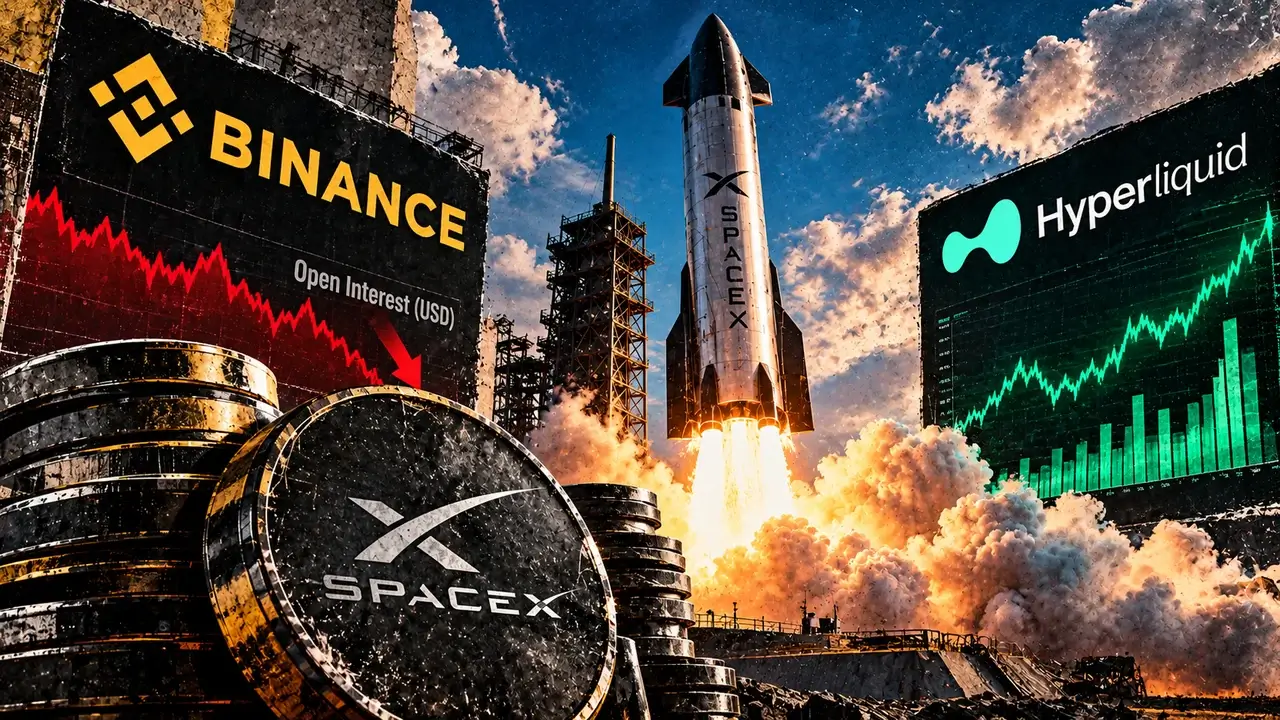
SpaceX perpetual futures trading surged around the company’s October 20 earnings release, even as Binance’s outstanding dollar exposure fell, according to market-data provider Talos.
Talos’s October 22 report puts SpaceX perpetual turnover across Binance and Hyperliquid at about $6 billion in the post-earnings episode it describes, more than eight times the prior day’s volume. Talos also reported that Binance open interest fell about 8% after earnings.
The figures separate trading activity around earnings from exposure left open afterward. Executions can create fee opportunities even while outstanding exposure contracts.
SpaceX’s third-quarter results release scheduled its earnings call for 4:30 p.m. Eastern on October 20. Talos says Binance’s SPCX perpetual gained 8.5% from the earnings print to the following US open.
The turnover figure covers two venues, while the dollar-open-interest figures are Binance’s alone. The two measures have different venue coverage and time windows, limiting comparisons between the trading surge and the positions that remained open.
How SpaceX perpetual futures generate fees
Volume and open interest measure different activity. Volume counts contracts traded during a period. Open interest counts contracts that remain outstanding, with each buyer-and-seller pair counted once.
Consider an existing long who sells to an existing short buying back to close. The execution adds volume, while both positions close and open interest falls. A busy market can therefore finish with fewer contracts outstanding.
Hyperliquid’s initial-margin formula multiplies position size by mark price and divides by leverage. Shared collateral and unrealized profits can affect margin available for other positions.
The current SPCX specification from market operator trade[XYZ] references one SpaceX Class A share quoted in dollars and permits cross margin with maximum leverage of 20 times.
These are derivative positions referencing the share’s price. Perpetual contracts use funding payments designed to help align their prices with the underlying in contracts with no scheduled expiry. The notional value of trading those contracts is consequently a different measure from purchases of the underlying stock.
Closing trades can produce fees alongside declining open interest. Estimating the commercial result follows a separate chain: turnover at each venue, the effective net fees charged, and the amounts allocated to each recipient.
Under Hyperliquid’s HIP-3 framework, market deployers define contract specifications and oracles, set leverage limits and can settle markets while using HyperCore’s order books and margin infrastructure. Their individual settings help determine how trading becomes income for the operator and protocol.
Hyperliquid’s rates depend on rolling 14-day trading volume, maker or taker status, staking discounts and referral eligibility. Eligible makers can receive rebates. Different users can therefore generate different net fees on the same amount of turnover.
The trade[XYZ] fee schedule illustrates the scale of that difference. Its tier-zero base standard taker rate is 0.09%, compared with 0.009% under its growth-mode schedule. The corresponding maker rates are 0.03% and 0.003%.
Growth mode is conditional. Hyperliquid says activating it on an eligible HIP-3 market reduces fees, rebates and volume contributions by at least 90%, with other discounts also affecting the outcome. SPCX’s historical growth-mode setting and its October 20–21 mix of trader tiers and rebates remain unverified.
The division of fees matters too. trade[XYZ] describes its standard fees as split equally between Hyperliquid and the operator. Other HIP-3 deployments can have different fee settings.
Applying one displayed Hyperliquid rate to Talos’s combined-venue turnover would skip all of those distinctions, including the portion traded on Binance. The event’s actual retained fees remain unquantified.
What reaches HYPE
Hyperliquid’s fee-allocation rules direct fees to several recipients, including market deployers and its assistance fund. The documentation says HIP-3 deployers may keep up to half of trading fees generated by their assets.
The assistance fund automatically converts the trading fees it receives into HYPE, and the acquired HYPE is burned. The relevant channel for token holders is therefore the fund’s own receipts and conversions. Gross trading fees, operator receipts and funds reaching that mechanism are different amounts.
